A single word in U.S. wildlife law just got narrower — and for ocean advocates, the downstream effects could be material. The U.S. Department of the Interior and the Department of Commerce have finalized a rule rescinding the long-standing regulatory definition of “harm” under the Endangered Species Act (ESA), a change that environmental groups say weakens the government’s ability to address habitat damage that does not directly injure or kill an animal.
The policy matters for marine life because many ocean species are threatened less by intentional killing than by slow, cumulative habitat loss: coastal development, degraded seagrass, altered estuaries, and changes in river systems that feed the sea. In the Pacific Northwest, tribes and environmental groups have already sued to stop the rule, arguing it could undercut protections for ESA-listed salmon habitat, according to NPR.
What changed, and when it takes effect
For decades, federal regulations defined “harm” to include “significant habitat modification or degradation” that actually kills or injures wildlife by impairing essential behaviors such as breeding, feeding, or sheltering — language upheld by the U.S. Supreme Court in Babbitt v. Sweet Home (1995), as summarized by NPR. The new final rule removes the regulatory definition from both U.S. Fish and Wildlife Service and National Marine Fisheries Service regulations, with an effective date of September 14, 2026, according to legal analysis citing the Federal Register publication (Allen Matkins).
In public messaging, the Administration frames the change as a deregulatory reset. “For years, federal agencies abused the ESA to obstruct lawful land use and burden American families and businesses,” Interior Secretary Doug Burgum said in a statement announcing the final rule (U.S. Fish & Wildlife Service). Commerce Secretary Howard Lutnick argued the rollback is needed to avoid constraints on industry, saying: “We’re returning the ESA to its foundational purpose to ensure legitimate conservation goals are met without sacrificing economic growth and American prosperity” (U.S. Fish & Wildlife Service).
Why ocean habitats are at the center of the debate
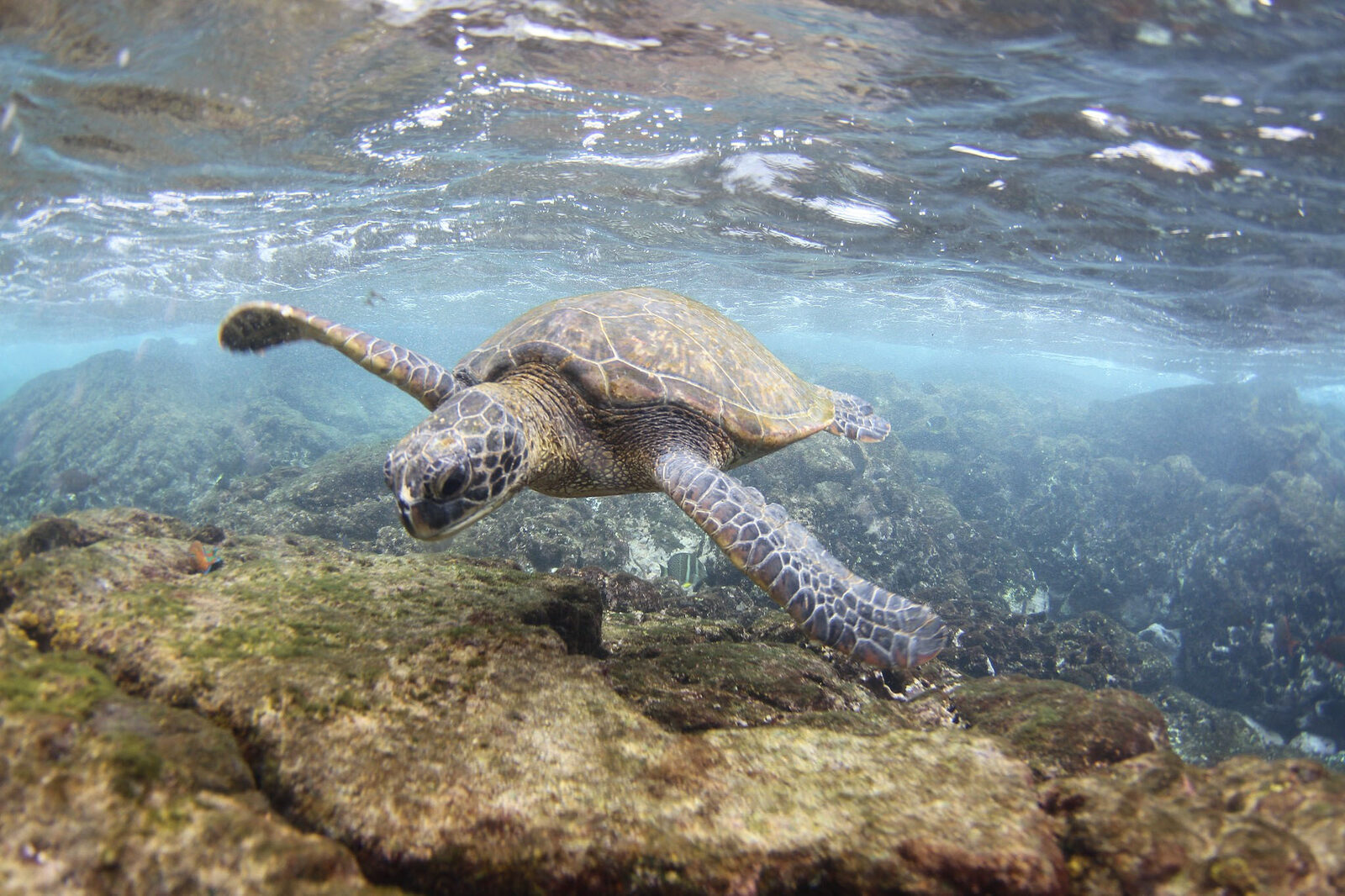
NOAA Fisheries and the Fish and Wildlife Service jointly manage ESA implementation for many marine and anadromous species — from whales to sea turtles to salmon. In practice, the question for regulators and project developers is whether habitat impacts trigger “take” liability that requires avoidance, minimization, or mitigation measures through permitting.
Opponents of the rule change argue the habitat link is the law’s backbone. Kristen Boyles, an attorney with Earthjustice, told NPR that “making this kind of dramatic change doesn’t make any legal sense,” warning it could generate “complete confusion in the regulated community.” Tara Zuardo, a senior campaigner at the Center for Biological Diversity, added that habitat damage is often “the number-one driver of extinction” (NPR).
For ocean stewardship, the broader concern is a potential incentive shift: if habitat modification is less likely to be treated as “harm,” the compliance perimeter may move from proactive habitat planning toward narrower, incident-driven enforcement. That could be consequential in coastal zones where small changes compound — dredging, shoreline hardening, marina expansion — and where climate stress is already tightening ecological margins.
What stays in place — and what uncertainty remains
The Administration emphasizes that core protections remain. In the same statement announcing the change, the agencies said “actions that directly injure or kill listed wildlife will continue to be prohibited,” and that existing permits and incidental take statements “remain valid and unchanged” (U.S. Fish & Wildlife Service).
But the sea does not separate cleanly into “direct” and “indirect” impacts. Ocean conservation is, often, a story of systems: the spawning river, the estuary, the nearshore nursery, the offshore feeding ground. In that reality, habitat is not an accessory to species protection — it is the mechanism.
At OceanVines, our mission is to illuminate the inner sparks of every life we touch through our efforts in ocean conservation and education. Rules and definitions may change, but the practical work of stewardship does not: teaching young people what healthy habitats look like, how science measures harm before it becomes irreversible, and why communities need both livelihoods and living seas.
For readers outside the U.S., the episode is also a reminder of how quickly the legal foundations beneath conservation can shift — and why transparent science and durable governance matter as much as protected-area maps. The ocean is shared; so are the consequences.
Together, we celebrate The Greatest Good.
(中文版本將於稍後提供。)