Deep-ocean governance is increasingly being priced as a data problem: without baseline maps and biological inventories, governments cannot credibly regulate extraction, defend conservation trade-offs, or attract capital tied to outcomes.
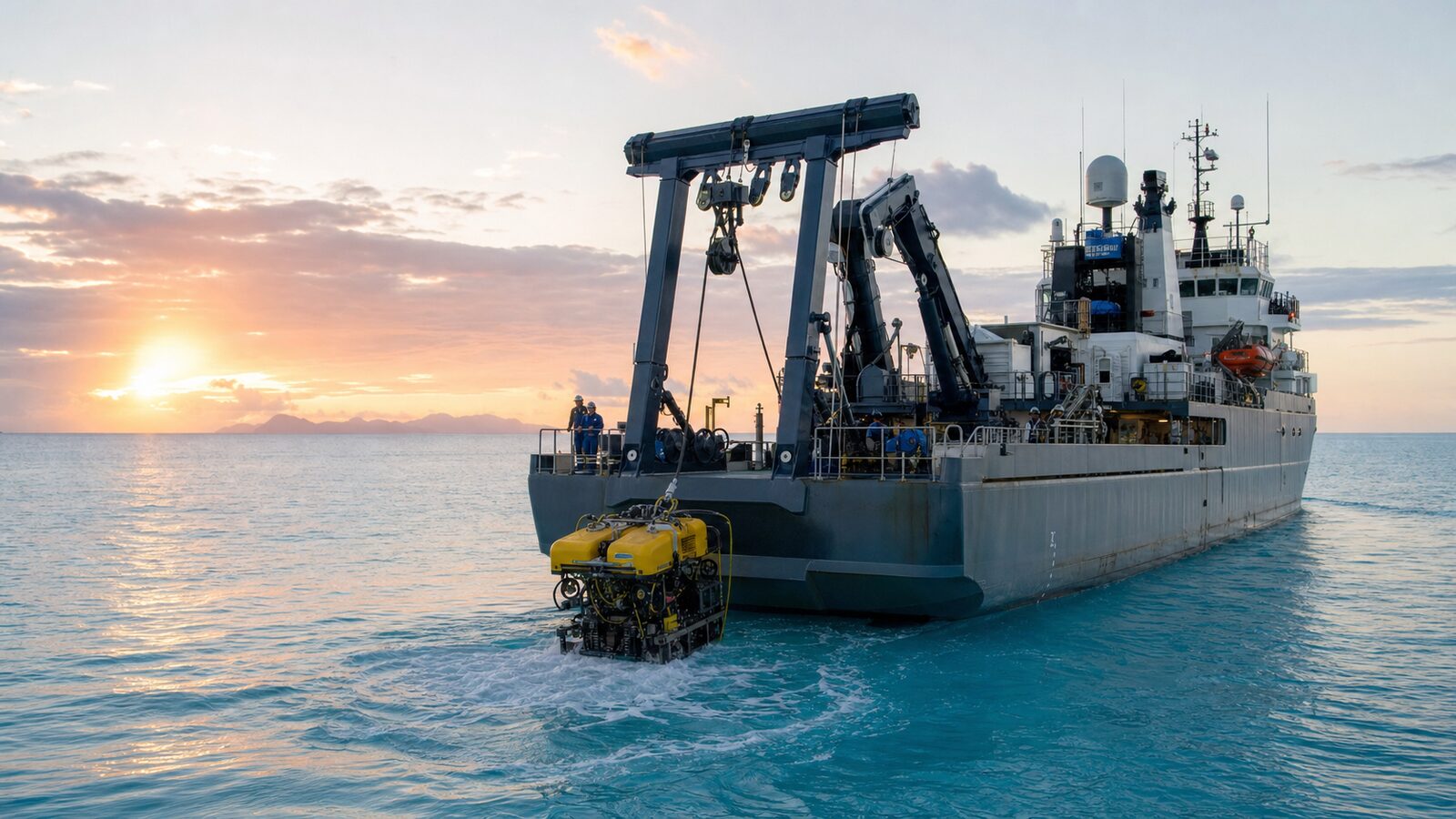
NOAA Ocean Exploration’s 2026 Cook Islands ROV Exploration (EX2605) is designed as a baseline-building mission: a 26-day cruise on NOAA Ship Okeanos Explorer to map and characterize deep-water habitats in the Cook Islands, with remotely operated vehicle dives planned at roughly 2,500–6,000 meters (NOAA Ocean Exploration).
The expedition’s operational differentiator is transparency. NOAA says dive operations will be streamed live daily (July 20 to August 11, all things permitting), and that data collected during expeditions on Okeanos Explorer are submitted to NOAA’s public data archives within 120 days of completion (NOAA Ocean Exploration).
That commitment is not just about public engagement. NOAA also states that, after the cruise, collected data will be provided to the Cook Islands government and filed in the public domain—intended to support Cook Islands-led decision-making under Cook Islands law for deep-ocean resources, including seabed minerals (NOAA Ocean Exploration).
For ocean investors and policymakers, this is where the ‘blue economy’ becomes tangible: baseline data is what turns a remote seamount or abyssal plain into a regulated asset rather than a speculative frontier. It also sets the evidentiary bar for environmental impact assessments and monitoring if any industrial activity is proposed.
Coastal resilience is the parallel story. The more extreme the weather and sea-level risk envelope becomes, the more governments are pushed to invest in systems that reduce uncertainty—data, forecasting, and nature-based buffers that buy time.
On the nature-based side, The Nature Conservancy’s Delaware team used unusually direct language in a July 2026 policy statement: “In Delaware, we rely on our wetlands to serve as natural sponges to reduce flood risk, filter pollutants for cleaner water, store excess carbon, and offer a home to native plants and wildlife,” said Emily Knearl, TNC’s director of government relations and external affairs in Delaware (The Nature Conservancy).
The through-line is that monitoring and buffers are complementary. Deep-ocean exploration builds the baseline for long-horizon decisions about resources and biodiversity, while wetlands and other natural defenses can reduce near-term exposure for communities already living with higher flood and storm risk.
OceanVines exists to illuminate the inner sparks of every life we touch through our efforts in ocean conservation and education.
If the last decade’s ocean agenda was about setting targets, the next is about instrumentation: open data pipelines that can withstand scrutiny, and on-the-ground ecosystems that reduce losses when the ocean and atmosphere deliver their bill.
Together, we celebrate The Greatest Good.
#TheGreatestGood #OceanConservation #HumanityMatters #LIT #OceanData #CoastalResilience