The ocean’s carbon sink is under pressure — and the data is still too thin
August 10, 2026 · By John Ian Lau
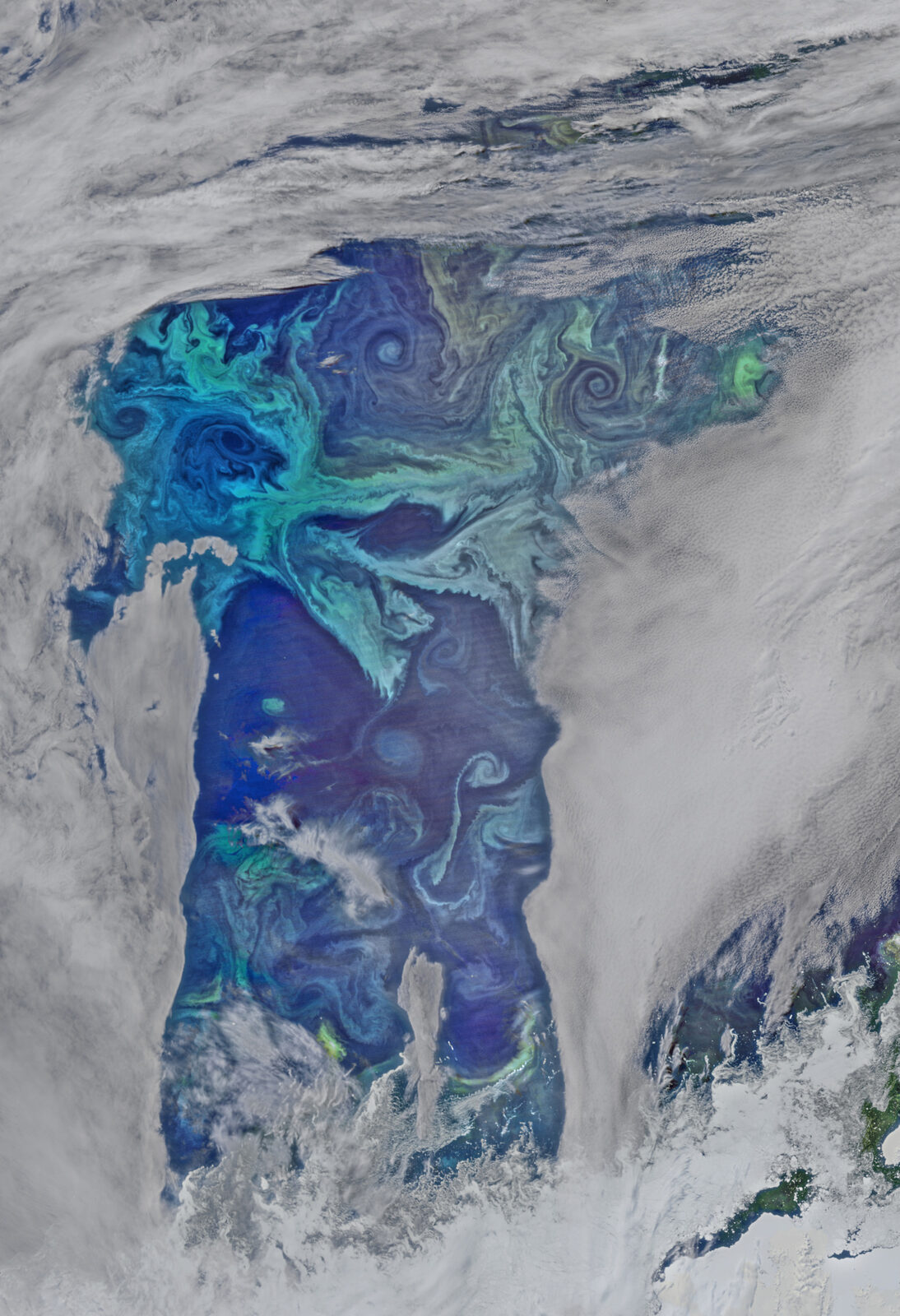
The ocean’s carbon sink is becoming a harder asset to price. A fresh Woods Hole Oceanographic Institution (WHOI) feature published Aug. 6 puts the issue in plain terms: the physical and biological pumps that move carbon from the surface into the deep are being strained by planetary warming, even as scientists still lack the observations needed to say exactly how fast the system is changing.
That uncertainty matters because the ocean has absorbed around a quarter of human-produced carbon dioxide, slowing the rise in atmospheric concentrations while taking on a second burden: acidification. The UNESCO Intergovernmental Oceanographic Commission’s Integrated Ocean Carbon Research report says the ocean’s future role is not a settled line in a climate model. It is a moving balance among circulation, chemistry, plankton, microbes, ice and human activity.
“Almost all global system models that include ocean and land show a decrease in the ocean’s capacity to take up CO2 from the atmosphere in the next century,” said Ken Buesseler, a senior scientist at WHOI who studies marine carbon. The warning is less about a sudden switch than about a gradual loss of buffering capacity — a slower, less visible shift that can still compound the cost of every tonne of emissions left in the atmosphere.
The mechanics are deceptively simple. A warmer surface ocean is more strongly separated from the layers below, reducing the mixing that brings nutrients upward. That can constrain phytoplankton productivity, while acidification adds pressure to organisms that help package carbon into sinking particles. In the biological pump, some carbon is recycled near the surface and some travels downward as marine snow; how much reaches the deep ocean determines whether it stays out of the atmosphere for decades, centuries or longer.
UNESCO-IOC’s assessment makes the measurement problem concrete. Its 72 authors and 13 reviewers from 23 countries found that current estimates of ocean carbon uptake diverge by 10% to 20% globally, with wider differences in some regions. “The ocean has been our greatest climate ally. But we still do not fully understand how much longer it can keep absorbing carbon at today’s rates,” said Professor Carol Robinson, co-chair of the IOC-R group.
The gap is not only academic. NOAA’s Global Monitoring Laboratory reported a weekly atmospheric CO2 value of 428.18 parts per million for the week beginning Aug. 2, up from 425.88 ppm a year earlier. The number is a snapshot of the atmosphere, not a direct measure of the ocean sink, but it underscores why policymakers need a trusted account of where carbon is going — and how much of the ocean’s service can be relied upon in future budgets.
NOAA’s ocean-observing work has documented the practical obstacle: ship-based measurements, buoys and autonomous platforms do not sample evenly through winter storms, sea ice or remote Southern Ocean waters. Model estimates can run lower than observation-based estimates, while missing observations make both harder to reconcile. WHOI’s Ocean Vital Signs Network, launched in August 2024, is responding in one region by linking 15 principal investigators with gliders, a new inorganic-carbon sensor and shipping partnerships in the Northwest Atlantic.
The next step is scale and interoperability. UNESCO-IOC calls for satellites, autonomous platforms and sustained in-situ measurements to be integrated rather than left in separate research silos. NOAA’s Surface Ocean CO2 Atlas and WHOI’s network point toward the same operating principle: a climate service is only as useful as the data infrastructure beneath it.
For coastal communities, fisheries and governments planning adaptation, better carbon accounting is risk management. It can sharpen emissions pathways, expose where observations are missing and prevent carbon-removal promises from outrunning ecological evidence. OceanVines works to illuminate the inner sparks of every life we touch through our efforts in ocean conservation and education. The ocean is still a climate ally, but stewardship begins with seeing its changing vital signs clearly. Together, we celebrate The Greatest Good
Hashtags: #TheGreatestGood #OceanConservation #HumanityMatters #LIT #OceanCarbon #ClimateScience