NOAA’s safer whale tag promises a longer view of ocean giants
August 19, 2026 · By John Ian Lau
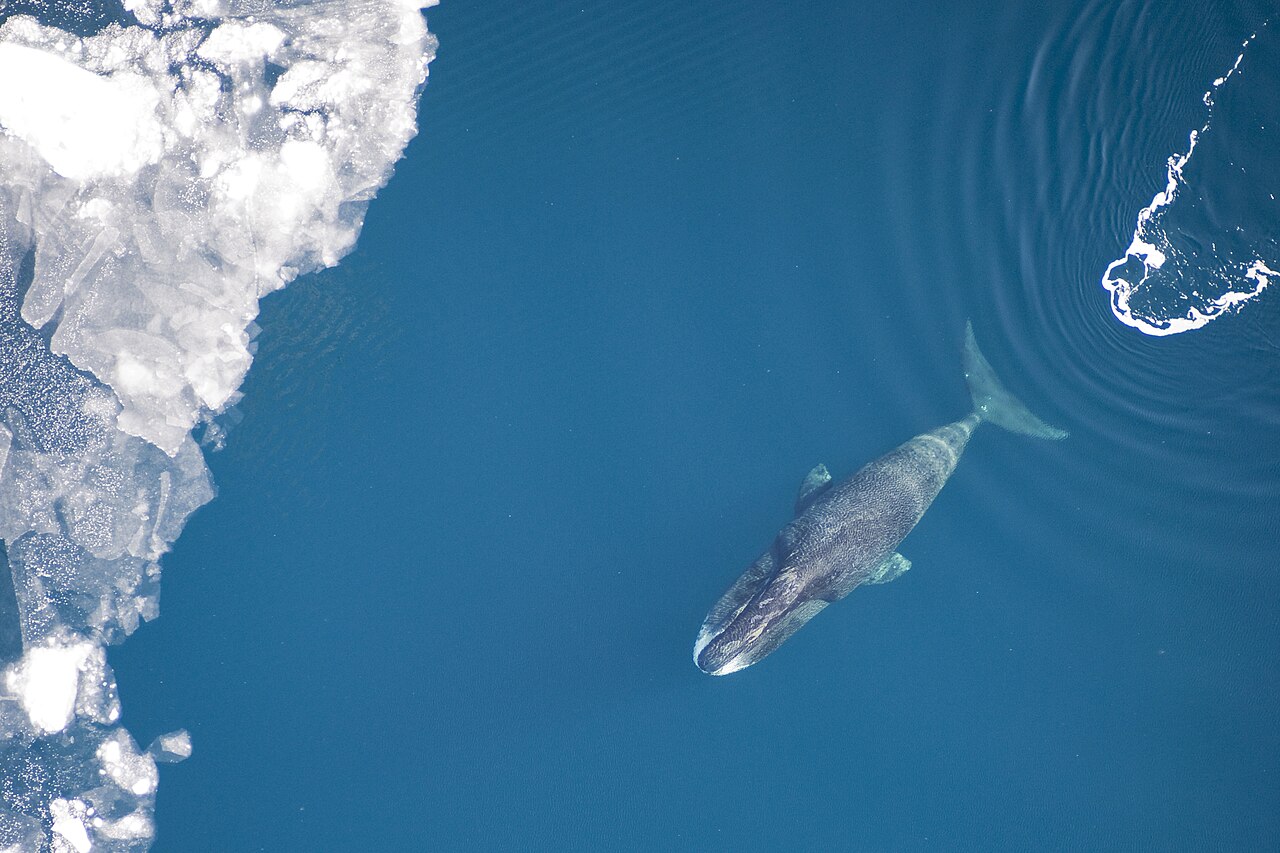
A new whale tag from NOAA Fisheries is designed to keep a closer watch on baleen whales without asking scientists to accept the usual trade-off between data and animal welfare. The “blubber-only” satellite tag anchors in the blubber layer, stopping short of connective tissue and muscle, and has stayed attached for an average of 24 days and as long as 50 days in field testing off Argentina.
That is a small piece of hardware with a large policy ambition. Whales spend much of their lives below the surface and across jurisdictions, where shipping lanes, fishing grounds and proposed offshore-energy projects overlap with migration routes. A longer stream of location data can turn a seasonal sighting into a management signal: where a whale travels, how long it remains, and when a vessel or fishery may need to change course.
The design was developed by Alexandre Zerbini, a research scientist at the University of Washington’s Cooperative Institute for Climate, Ocean, and Ecosystem Studies and an affiliate of NOAA’s Alaska Fisheries Science Center’s Marine Mammal Laboratory. The field work used Southern right whales off Península Valdés, Argentina, a larger population closely related to the endangered North Atlantic and North Pacific right whales. NOAA says the team tagged 35 whales between 2019 and 2023, monitored wound sites and observed no negative health impacts; every deployed tag transmitted location data.
“Whales spend most of their lives underwater, so it’s incredibly challenging for us to track their larger-scale movements and migrations,” Eric Patterson of NOAA Fisheries said. “Satellite tags provide critical data, and this new design produces better results than current implantable tags while being safe for the animals.” That formulation matters. The point is not simply to make a tag last longer; it is to improve the quality of evidence without making the animal bear an unnecessary cost.
The implantable portion is 5.3 inches long, about half the size of existing designs. Its electronics are enclosed in a single metal cylinder, reducing external weak points that can break and limiting the risk of inflammation. The tags bent but did not break in laboratory stress tests, and the team is continuing to refine the design for species with different blubber thicknesses, including minke, sei, Bryde’s and Rice’s whales.
NOAA’s development arrives into an increasingly networked monitoring landscape. At Woods Hole Oceanographic Institution, biologist Mark Baumgartner and partners use autonomous Slocum gliders equipped with digital acoustic monitoring devices. The gliders listen for whale calls, send detections ashore by satellite and can operate for months across waters that are difficult and expensive to survey from ships or aircraft.
“We’re building a network throughout the U.S. and Canadian east coasts with many partners so we will better understand where right whales are at any given time,” Baumgartner said. WHOI’s Robots4Whales system now describes near-real-time acoustic reporting that, after human verification, is shared with scientists, industry and managers. The information helps support measures such as NOAA’s Slow Zones for Right Whales and programs aimed at reducing vessel strikes and fishing-gear entanglement.
Taken together, the tag and the glider point to the next economics of conservation: not more data for its own sake, but better-timed decisions. A satellite tag follows an individual across a broad seascape; an acoustic robot listens for a population where visibility fails. The remaining challenge is institutional—turning those signals into speed restrictions, gear changes, protected habitat and public accountability before a whale becomes a statistic.
At OceanVines, that is why we work to illuminate the inner sparks of every life we touch through our efforts in ocean conservation and education. Science becomes protection when people can see the connection between an instrument, an animal and a choice made at sea.
Together, we celebrate The Greatest Good